
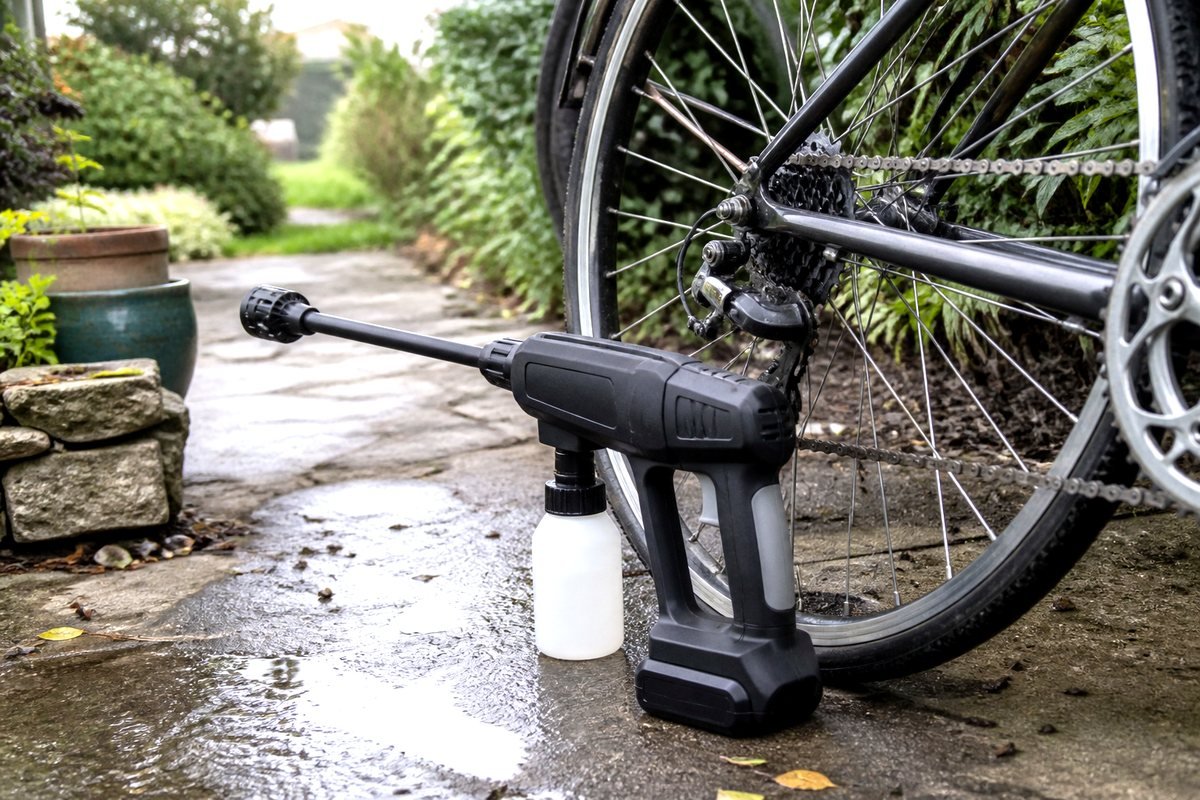
Battery pressure washers
A cordless pressure washer is for the jobs where dragging a lead out is more hassle than the dirt itself. Cars, bikes, garden furniture, muddy boots and kit at the side of a pitch. What it is not is a battery version of a 110 bar plug-in machine, and anyone buying one to clear a mossy patio is going to be disappointed by lunchtime.
The six below are ranked on the three things that actually decide whether you get on with one: how much pressure it makes, where it gets its water from, and how heavy it is once the battery is in. Prices are UK, and most of these are sold bare as well as in a kit. Here’s how we review.
- Worx WG633E
- Greenworks G24PW
- Ryobi RY18PWX41A
- Bosch Fontus Gen II
- Kärcher OC 6-18
- Makita DHW080ZK
- Full comparison
- FAQs
Best cordless pressure washers at a glance
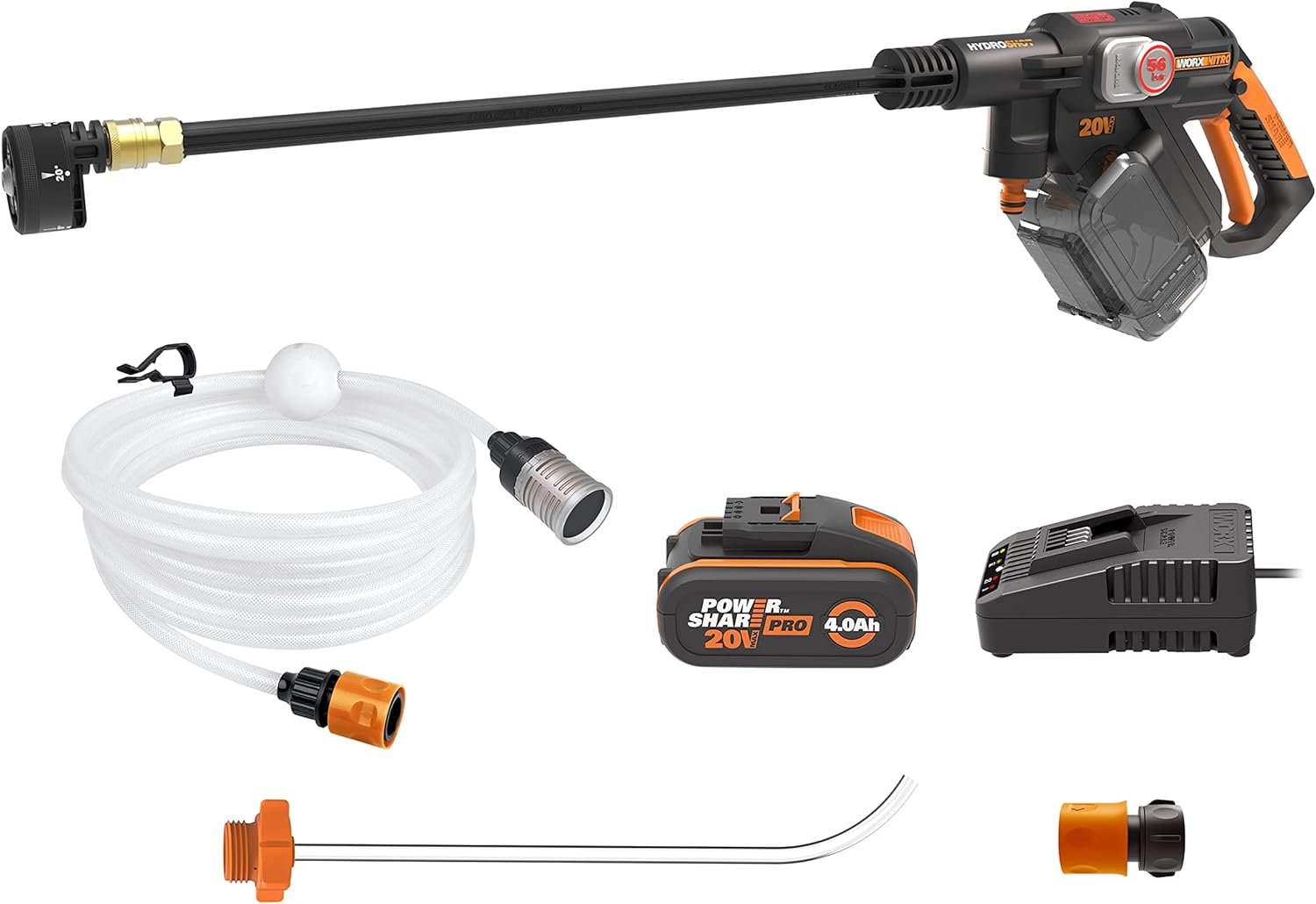
Worx Nitro HydroShot WG633E
38 bar rated and 220 L/h from a gun that weighs 2.2 kg with the battery in. Draws from a bucket, a bottle or the tap.
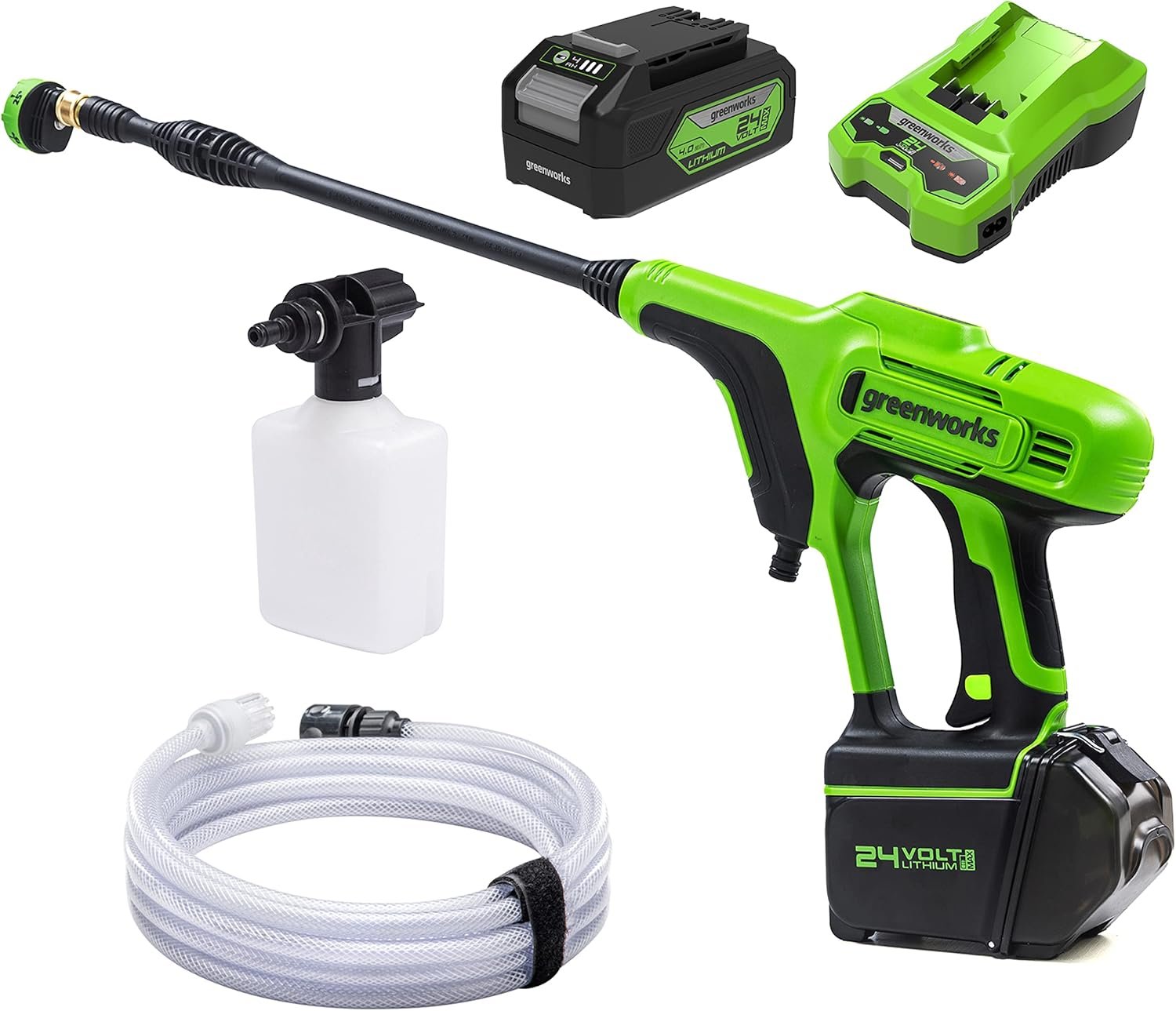
Greenworks G24PW
24 bar and 180 L/h with a 6 m siphon hose. The cheapest way in if there’s already a 24V pack in the shed.
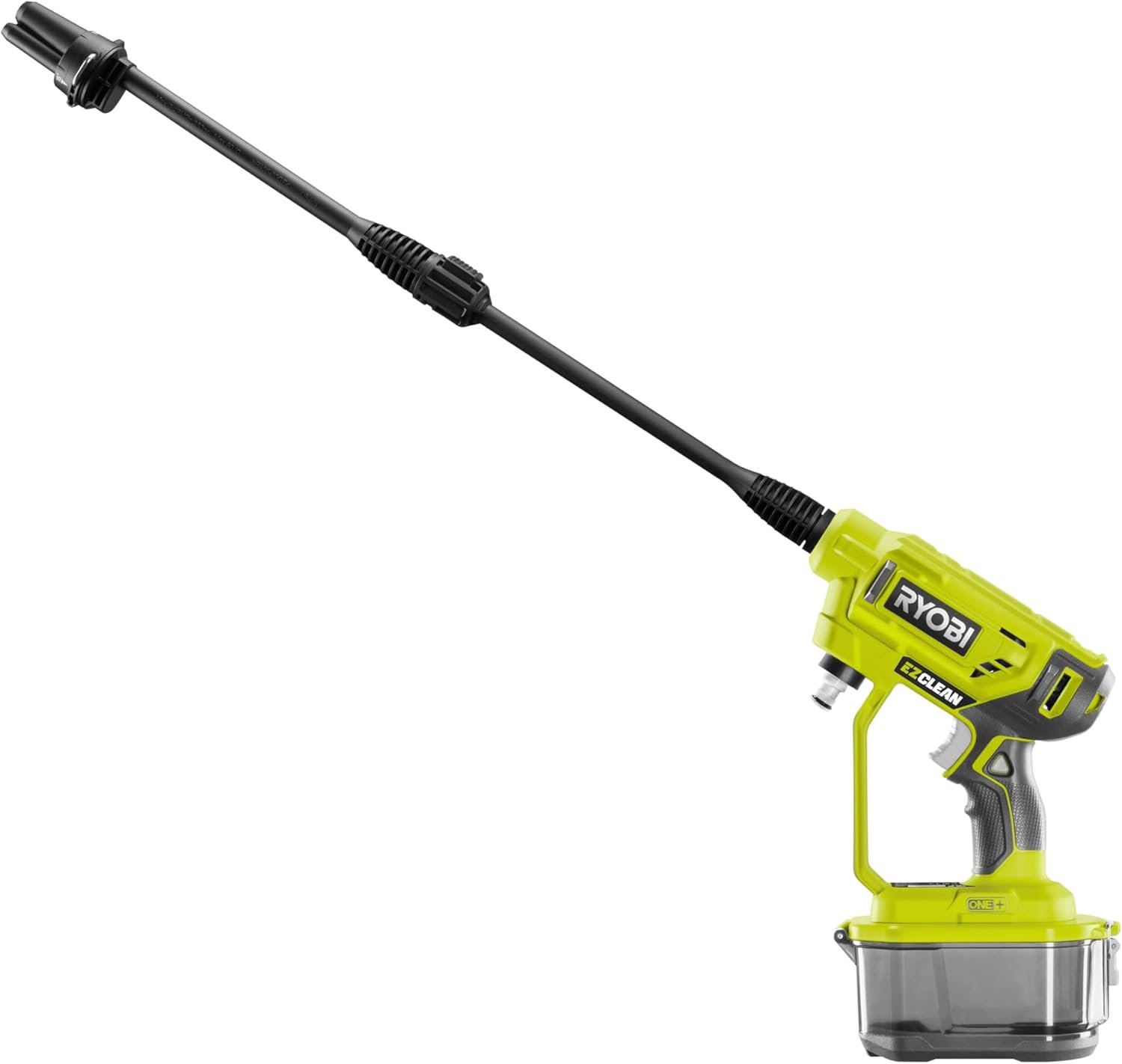
Ryobi RY18PWX41A
Three power steps at 41, 22 and 7 bar, so you can drop it right down for paintwork. Runs any 18V ONE+ pack.
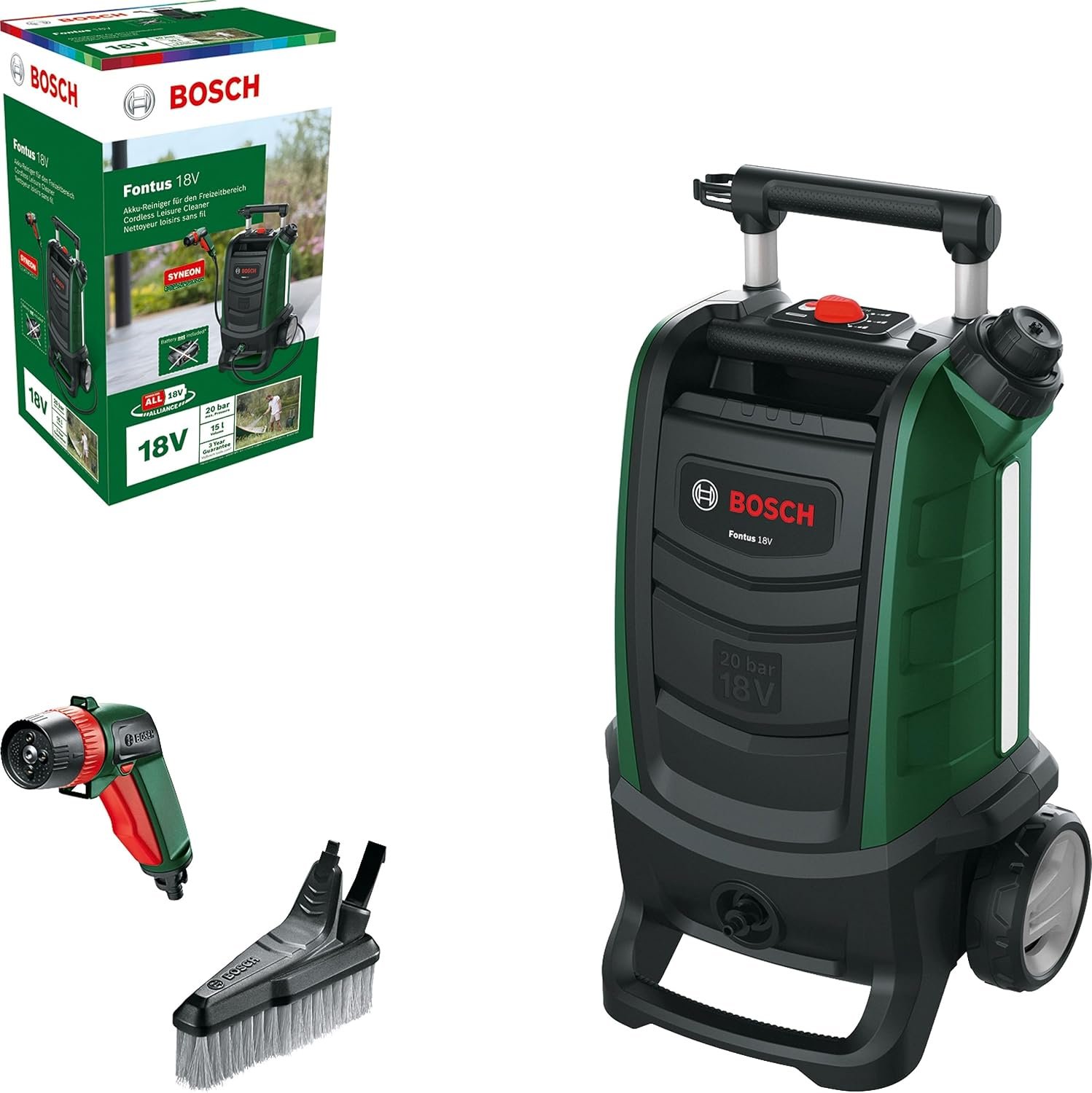
Bosch Fontus Gen II
20 bar with a 15 L tank on board. Fill it at the kitchen tap, wheel it to the job and forget about hoses entirely.
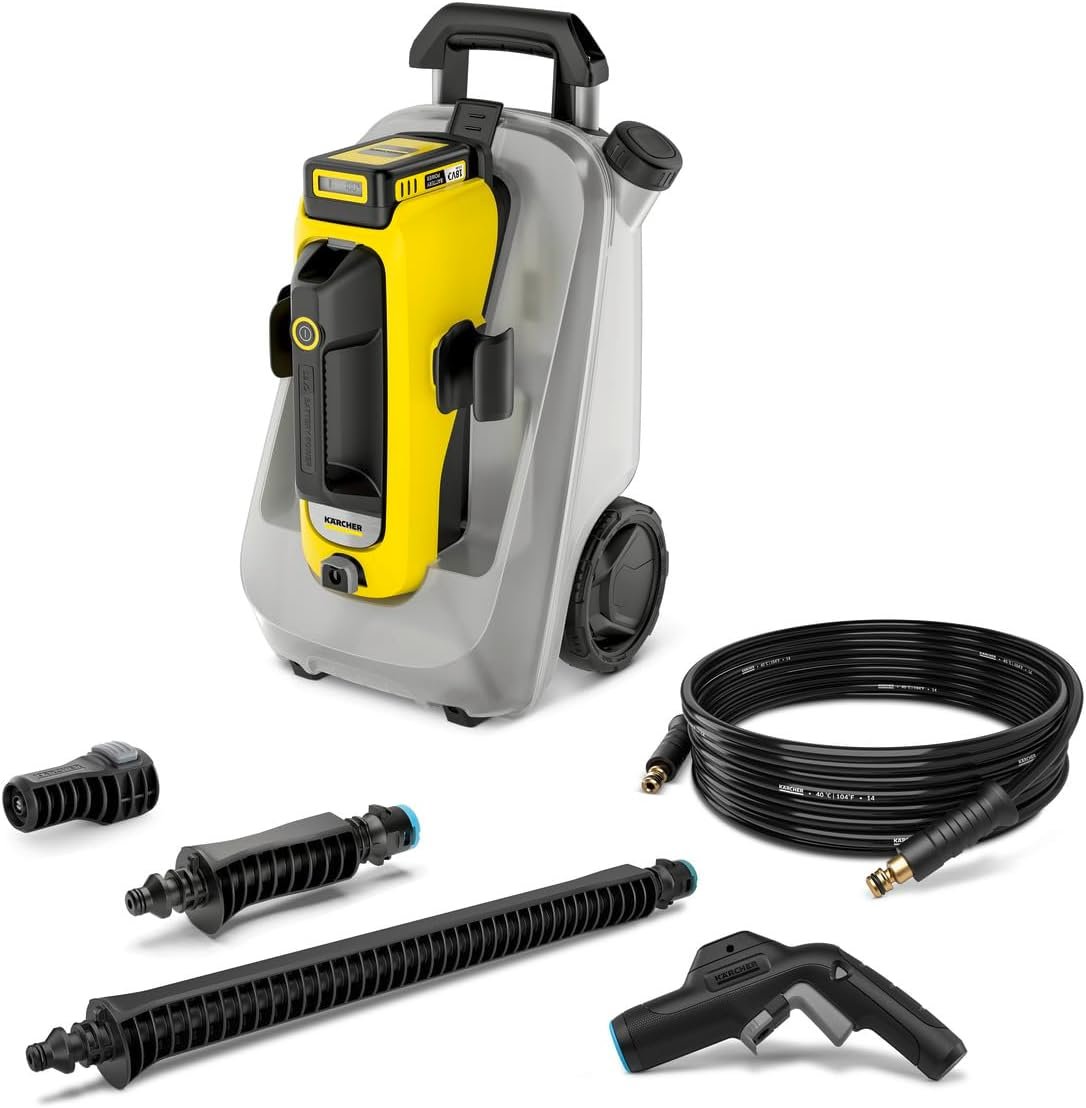
Kärcher OC 6-18 Premium
24 bar, 200 L/h and a 12 L trolley at 5.7 kg. Worth it if the Battery Power packs are already in the garage.
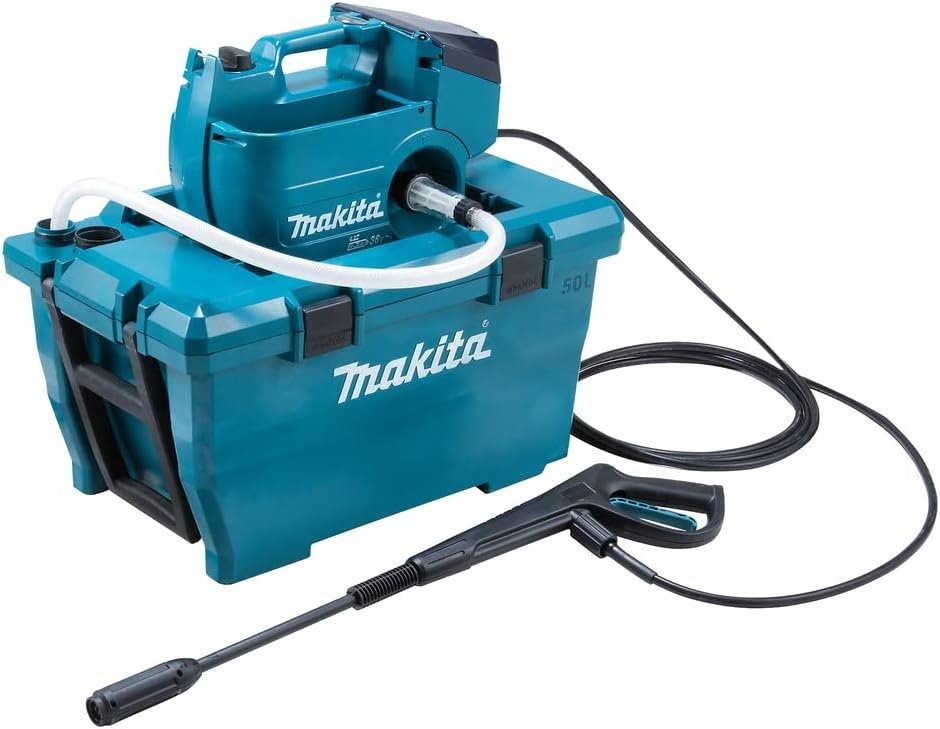
Makita DHW080ZK
30 to 55 bar working and around 330 L/h on high, running two 18V LXT packs. The most capable machine here by a distance.
Cordless pressure washers compared
Water source is the column to read first. A siphon hose means you’re carrying a bucket, a tank means you’re pushing a trolley, and a tap connection means you may as well have bought a mains machine.
| Model | Best for | Pressure | Flow | Water source | Weight | Price |
|---|---|---|---|---|---|---|
| Worx Nitro HydroShot WG633E | Most people | 38 bar rated, 56 bar allowable | 220 L/h max | 6 m siphon, bottle or tap | 2.2 kg with battery | £129.99 bare |
| Greenworks G24PW | Bikes and furniture | 24 bar | 180 L/h | 6 m siphon | 4 kg | £89.99 bare |
| Ryobi RY18PWX41A | Cars, if you’re on ONE+ | 41 / 22 / 7 bar | 160 / 110 / 70 L/h | 6 m siphon, 2 L bottle or tap | 2 kg bare | £129.90 bare |
| Bosch Fontus Gen II | No outdoor tap | 20 bar | About 90 to 186 L/h | 15 L tank or tap | 7.5 to 9.8 kg empty | £179 bare |
| Kärcher OC 6-18 Premium | Kärcher 18V owners | 24 bar | 200 L/h | 12 L trolley or tap | 5.7 kg | £229.99 bare |
| Makita DHW080ZK | LXT owners | 30 to 55 bar working, 80 bar max | About 330 L/h high | 50 L case, self-prime to 1 m, or tap | 7.1 to 7.9 kg with batteries | £435 bare |
1. Worx Nitro HydroShot WG633E: best cordless pressure washer overall
The HydroShot is the one we’d point most people at, because it gets the balance right. 38 bar rated is enough to shift road film and mud without being the sort of pressure that lifts lacquer, 220 L/h keeps the rinse moving, and the whole thing weighs 2.2 kg with a battery in. You can hold it out at arm’s length over a wheel arch for a full ten minutes without your shoulder complaining, which is not true of the trolley machines further down.
The 6 m siphon hose is the feature that matters most. Drop it in a bucket and you have a working pressure washer anywhere, no tap involved. The 4Ah kit gives you about 12 minutes on high or 22 on eco, and eco is genuinely enough for a car rinse. Buy bare only if you already run 20V PowerShare. There’s more in our Worx HydroShot review.
Buy it for
- Cars, bikes and furniture, which is most of what these are used for
- Drawing straight out of a bucket with the siphon hose
- Living in the boot of the car without taking up any real space
Skip it if
- You already run Ryobi 18V ONE+, where the Ryobi saves you a battery platform
- There’s no tap and you won’t carry a bucket, which is the Fontus job
2. Greenworks G24PW: best budget cordless pressure washer
At £89.99 bare this is the cheapest sensible way into a battery washer, and 24 bar with 180 L/h is a fair amount of cleaning for the money. It will strip mud off a mountain bike, freshen up a set of rattan chairs and give a car a decent rinse. What it will not do is match the Worx for pressure, and at 4 kg it’s twice the weight in the hand.
The maths only really works if there’s already a Greenworks 24V pack in the shed, because the bare box does not include one. If you’re starting from nothing, the Worx kit is the better buy once you have added a battery and charger to this. Greenworks doesn’t publish a runtime figure, so plan around one job at a time. Our Greenworks G24PW review has the detail.
Buy it for
- Bikes and garden furniture
- A light car rinse
- Anyone already running Greenworks 24V tools
Skip it if
- You’re not on 24V and can stretch to the Worx kit instead
3. Ryobi RY18PWX41A: best cordless pressure washer for cars
Three power steps are what make this the car pick. 41 bar for the arches and sills, 22 bar for general panels, and 7 bar when you just want to sheet water over the paint without driving grit into it. Being able to step down at the tool rather than backing away from the panel is the difference between a quick wash and a swirl-mark apology, and none of the other guns here give you that range.
It’s 2 kg bare and takes any 18V ONE+ pack, so it costs almost nothing to add if there’s already Ryobi kit in the garage. If there isn’t, budget for a 18V ONE+ battery at around £79.95 on top, which pushes it past the Worx. One thing to watch when you’re shopping: this is the 41 bar model, not the older 22 bar Ryobi washer that looks similar. Our Ryobi EZClean review and the car guide go further.
Buy it for
- Anyone already on Ryobi 18V ONE+
- Three power steps, including a genuinely gentle one
- Cars on a drive with a tap within reach
Skip it if
- You’ve no Ryobi tools and want the most pressure in a small gun, which is the Worx
4. Bosch Fontus Gen II: best cordless pressure washer with no tap
The Fontus solves one specific problem: no outdoor tap. Fill the 15 L tank at the kitchen sink, wheel it out to the car or the bikes and you’re cleaning, with no hose trailing through the house. For flats, yards and anywhere the nearest tap is inside, that’s the whole ball game, and 20 bar is plenty for a rinse.
Be realistic about the weight. It’s 7.5 to 9.8 kg empty and you’re adding another 15 kg of water on top, so this is something you roll rather than carry, and getting it up a flight of stairs full is not happening. The 60 minute claim is battery life, not water, and 15 L goes considerably faster than that. There’s more in our Bosch Fontus review and the tank machine guide.
Buy it for
- Filling at the kitchen tap and rolling out to the job
- Flats and properties with no outdoor tap at all
- A full hour of battery on a single 2.5Ah pack
Skip it if
- You always have a tap nearby, where the Worx or Ryobi is lighter and stronger
5. Kärcher OC 6-18 Premium: for Kärcher 18V owners
24 bar and 200 L/h from a 12 L trolley, which works out at roughly three to five properly dirty bikes per fill. At 5.7 kg it sits between the handhelds and the Fontus, and it’s the obvious choice if there are already Kärcher 18V Battery Power packs in the garage from a hedge trimmer or a window vac.
Two things to be clear about before you buy. This is not a battery K 2, and nobody should expect mains-class pressure from it. It’s also a different animal from the OC 3 family, which are 5 to 6 bar rinsers rather than pressure washers. The suction hose is an extra if you want to draw from a bucket rather than fill the tank. Our Kärcher OC 6-18 review covers it properly.
Buy it for
- Anyone already on Kärcher 18V Battery Power
- Three to five dirty bikes on one 12 L fill
- 200 L/h, the best flow rate of the tank machines here
Skip it if
- You want a bigger tank, which is the Fontus at 15 L
- You want more pressure for less money, which is the Worx
6. Makita DHW080ZK: the closest thing to a small mains washer
This is the one that starts to feel like a proper pressure washer rather than a powerful hose. 30 to 55 bar working with around 330 L/h is roughly double the flow of the handhelds, the 50 L case means far fewer refills, and the self-prime pulls from a water butt or a trough up to a metre below it. On a trade van or a smallholding it genuinely earns its place.
The price is the catch. £435 bare with no batteries included, and two 18V LXT packs on top can take the total past £500 if you’re starting fresh. It also still sits below a mains K 2 on pressure, so if you have a tap and a 13A socket, a mains machine like the K4 does more work for a third of the money. Our Makita DHW080 review has the rest.
Buy it for
- Anyone already invested in Makita 18V LXT
- Self-priming from a butt, trough or stream up to 1 m below
- The 50 L case, which means far fewer trips to refill
Skip it if
- This would be your first Makita, since packs can push it past £500
- You have a tap and a socket, where a mains K4 is faster and cheaper
Handheld, tank or mains: which do you actually need?
Nearly every disappointing cordless purchase comes from picking the wrong one of these three, so it’s worth two minutes before you spend anything.
| Type | How it gets water | Buy one if |
|---|---|---|
| Handheld with a siphon Worx, Ryobi, Greenworks |
A 6 m hose dropped into a bucket, a bottle, or straight off the tap | You’re happy to carry a bucket. Lightest, cheapest and the most pressure per pound. This is the right answer for most people cleaning cars, bikes and furniture. |
| Tank trolley Fontus, OC 6-18 |
An onboard tank of 12 to 15 L that you fill indoors | There’s no outdoor tap at all. You gain independence and lose pressure, and you’re pushing 20 kg or more once it’s full. |
| Mains K4, K5, Bosch |
Permanently connected to the outdoor tap | You have a tap and a 13A socket. Four to six times the pressure of anything on this page, and less than half the price of the Makita. |
The honest version. If your driveway is green and mossy, none of these six is the tool. A battery washer is for cars, bikes, furniture and kit at the side of a pitch. For patios and drives you want a mains machine, and for a plot measured in acres you want petrol.
Cordless pressure washer FAQs
What’s the best cordless pressure washer for most people?
The Worx Nitro HydroShot WG633E. It makes 38 bar rated with 220 L/h, weighs 2.2 kg with the battery fitted and draws from a bucket through a 6 m siphon hose, so it works anywhere. At £129.99 bare or around £199 as a kit it also costs less than the tank machines while making more pressure.
Can a cordless pressure washer clean a patio or driveway?
Not really. These run between 20 and 55 bar, and a mains machine makes 110 to 145 bar. That gap is exactly what moss and ingrained dirt need. Battery washers are for cars, bikes, garden furniture and muddy kit. If the drive is the job, buy a mains machine instead.
Do I need an outdoor tap?
No, and that’s the main reason to buy one. The Worx, Ryobi and Greenworks all siphon out of a bucket through a 6 m hose. If you won’t carry a bucket, the Bosch Fontus has a 15 L tank and the Kärcher OC 6-18 a 12 L trolley, both filled indoors. If you do have a tap and a socket, a mains machine is the better buy.
How long does the battery last?
Less than you’d like, but enough for the job. The Worx gives about 12 minutes on high or 22 on eco with a 4Ah pack, the Ryobi up to 22 minutes on high with a 5.0Ah, and the Kärcher 12 minutes on 2.5Ah or 24 on 5.0Ah. The Makita manages 15 minutes on high with two 6.0Ah packs. Bosch quotes up to 60 minutes for the Fontus, though that’s battery life rather than water.
How much pressure do you actually get?
Between 20 and 55 bar working across this group. The Makita is the strongest at 30 to 55 bar working and 80 bar max, then the Ryobi at 41 bar and the Worx at 38 bar rated. Even the Makita sits below a mains K 2, so treat any comparison with a plug-in machine carefully.
Should I buy bare or as a kit?
Bare only if you already own the battery platform. The Greenworks bare box has no pack at all, the Kärcher needs an 18V Battery Power pack at around £58, and the Makita needs two LXT packs which can take the total past £500. If you’re starting from nothing, the Worx kit at about £199 is the cleanest way in.
Is a tank worth the extra weight?
Only if you genuinely have no tap. A 12 L trolley does three to five dirty bikes before a refill, and the Fontus adds 15 kg of water to a body that’s already 7.5 to 9.8 kg empty. A handheld with a siphon hose and a bucket gives you more pressure for less money and a fraction of the weight.
Which one is best for bikes?
Any of the handhelds. The Greenworks at 24 bar is plenty for a muddy frame and is the cheapest way to do it, and the Worx gives you more pressure if you also want to wash the car. If you’re cleaning several bikes in one go after a ride, the Kärcher OC 6-18 trolley saves you refilling a bucket. There’s more in our bike guide.
More pressure washer guides
We may earn a commission if you buy through links on this page, at no extra cost to you. Prices were correct at the time of writing and change with sales.